
The Closing Gate
Why Columbus, MS is Saying Goodbye to the Armstrong Road Landfill

For over thirty years, the 23-acre stretch of land on Armstrong Road has been the silent recipient of Columbus’s growth and decay. It is a Class I rubbish site—a place for the “dry” remains of progress: roofing shingles from a spring renovation, the shattered timber of a fallen oak, and the skeletal remains of old porches. But as of March 2026, the gate is swinging shut for the public, and soon, it may close forever.
The decision to shutter the city landfill isn’t just a matter of logistics; it’s a reflection of a city at a crossroads, balancing a shrinking footprint with the rising costs of environmental stewardship.
The primary reason for the closure is simple and undeniable: the landfill is full. According to City Engineer Kevin Stafford, the site has not seen a formal expansion since 2010, and it has quite literally run out of room to grow. In recent work sessions with the City Council, Stafford revealed a stark reality – the dump is hemorrhaging money.
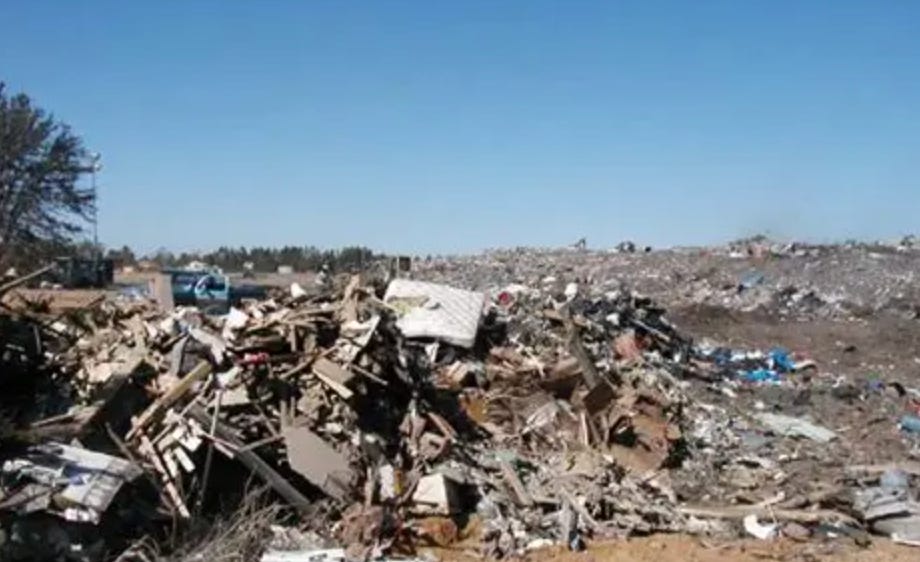
In 2014, the landfill processed 28,000 tons of waste. By 2025, that number plummeted to just 3,385 tons. Based on current usage, the landfill has approximately 1.94 years of “useful life” left. Mayor Stephen Jones has been blunt about the financial drain, stating, “We lose money on the landfill. It makes no sense to keep operating it.”
By closing the site to the public and restricting it only to the City’s Public Works Department, officials hope to stretch that remaining two-year window into three or five years. This “Public Works only” model allows the city to dispose of its own debris from street clearing and city projects without the site being overwhelmed by outside contractors.
Closing a landfill isn’t as easy as locking the gate. Under Mississippi Department of Environmental Quality (MDEQ) regulations, once a site reaches capacity, it must be “capped.” This process involves sealing the waste with specific clay layers and synthetic liners to prevent groundwater contamination.
The estimated cost for Columbus to cap the Armstrong Road site? Between $500,000 and $1 million. For a city already tightening its belt, building a new landfill from scratch is financially unthinkable. The permitting, land acquisition, and environmental studies alone would take years and millions of dollars. Consequently, the city is looking toward the Golden Triangle Regional Landfill in West Point as the permanent solution for all future waste.
For decades, local contractors and “do-it-yourselfers” relied on the Armstrong Road site for its convenience and low fees ($21 per ton). With the public lockout, the rules of the game have changed overnight. If you are a roofing contractor or a developer, the city is no longer your disposal partner.
The Golden Triangle Regional Landfill is now the primary destination. Located near West Point, it is a high-capacity facility that serves Lowndes, Oktibbeha, and Clay counties. Contractors must factor the extra drive time and fuel into their project bids.
Companies like Waste Pro and Waste Management (WM) offer roll-off dumpster rentals. For major renovations or demolition, these private services are the only way to keep a job site compliant with city ordinances against “curbside dumping.”
If you are a resident with a “large item”—a sagging mattress, an old sofa, or a rusted refrigerator—the curbside rules are specific and often misunderstood. The City currently maintains an open-top dumpster at 1600 12th Avenue South. This site is accessible Monday through Friday (8 a.m. to 5 p.m.) and is free for city residents who provide a valid ID. It is specifically designed for appliances, furniture, and tires (up to 30 per month).
While GTWS handles residential trash, they may pick up furniture and appliances, but only as their “manpower and truck capacity allows.” There is no guaranteed schedule for these pickups, and items should never be left on the curb indefinitely.
There is a crucial distinction in Columbus law regarding yard waste: homeowner-generated and contractor-generated. If you prune your own hedges, Public Works will pick up the debris (if cut to 5-foot lengths). If you hire a professional tree service or landscaper, they are legally required to haul the debris away. The city will not pick up piles left by hired help.
The closure of the landfill has birthed a secondary crisis: illegal dumping. With the “convenient” option gone, secluded areas like Pine Avenue and Walnut Street have become magnets for midnight dumpers.
The City Council is currently considering the temporary closure of these roads to prevent them from becoming unofficial, unlined, and dangerous “shadow landfills.” Building Department Director Nathan Katona has noted that even with signs and occasional cleanups, the piles of tires and rugs return within weeks.
The permanent closure of the Columbus landfill marks the end of an era of local self-sufficiency in waste. As the city transitions to a regional model, the responsibility shifts. For the city, it is a move toward fiscal solvency. For the contractor and the resident, it is a new reality of higher costs and longer hauls—a small price, perhaps, to keep the “Friendly City” from being buried under its own progress.
The shift toward a regional waste model doesn’t just change where the trash goes; it reconfigures the environmental and legal landscape of the entire Golden Triangle. As Columbus prepares to lean on its neighbors, the city is also bracing for the inevitable “side effect” of restricted landfill access: a rise in illegal dumping.
The closure of the Armstrong Road site effectively moves Columbus from a “provider” to a “customer” of regional waste services. Most of Columbus’s construction and demolition (C&D) waste—previously handled locally—will now flow to the GTRL near West Point. While the GTRL is a high-capacity site (estimated to have decades of life remaining), the sudden influx of thousands of tons annually from Columbus contractors will accelerate its consumption rate. Surrounding communities like West Point and Starkville may see increased heavy-truck traffic on regional arteries as Columbus-based contractors make the 20-mile haul.
As seen in recent City Council work sessions, the regional authority has already implemented fee increases (such as the $0.84 hike discussed in late 2025). As Columbus becomes more dependent on this single regional point of failure, residents and businesses should expect disposal fees to remain volatile.
The City understands that when legal disposal becomes “inconvenient,” empty lots and dead-end roads (like Pine Avenue) become targets. Here is how the city is arming itself for 2026:
Mississippi is moving to make illegal dumping a “high-stakes” crime. Under proposed Senate Bill 2819 (2026 session), penalties are set to skyrocket, increasing to a range of $500 to $1,500 for small-scale dumping (over 15 lbs).
Felony dumping (over 500 lbs or for commercial gain) can now carry fines up to $75,000 and up to 5 years in prison. Law enforcement now has the authority to seize and forfeit vehicles or equipment used in felony dumping violations.
City Engineer Kevin Stafford and the Building Department have identified specific “dumping hotspots.” The city is considering temporary closures of underutilized roads that serve no purpose other than access for midnight dumpers.
To back up the Code Enforcement Division, the city is being encouraged to use mobile surveillance units. In areas like the historic Friendship Cemetery outskirts or vacant lots in North Columbus, trail cameras and high-definition “litter cams” are being deployed to capture license plates. Will these be part of the Project NOLA camera grid?
The best way to stop dumping in an empty lot is to make it no longer empty. The City Council recently approved the purchase of 14 tax-forfeited properties specifically for the Blight Elimination Program. By cleaning up these lots and transitioning them to new owners or community green spaces, the city removes the “broken window” effect that signals to dumpers that a property is abandoned and unmonitored.
The permanent closure of the Armstrong Road landfill is a “hidden tax” on the citizens and business owners of Columbus. While the city is currently absorbing some of the operational costs to protect residents from immediate sticker shock, the long-term financial shift for private individuals and businesses is significant.
For the average resident, the financial impact is less about a monthly bill increase and more about the “convenience gap” and the cost of DIY projects. Historically, residents could haul their own debris to Armstrong Road for around $21 per ton. With that site restricted to Public Works, a resident with a pickup truck full of fence panels or old decking must now drive roughly 20 miles to the Golden Triangle Regional Landfill (GTRL) in West Point.
A round trip to West Point from Columbus takes approximately 45–60 minutes plus unloading time. For a citizen, this adds $15–$30 in fuel and vehicle wear per trip, effectively doubling the cost of small-scale disposal.
If you cannot haul it yourself, hiring a private service like LoadUp or Waste Pro in Columbus now starts at a base rate of approximately $89 to $125 for a single item (like a sofa or refrigerator). Larger cleanouts can easily reach $400–$800 as these companies pass their own increased fuel and labor costs for the West Point haul down to the customer.
Business Owners & Contractors are the hardest hit. In Columbus, roofing and renovation contractors were the primary private users of the city landfill. The city landfill low fees were essentially subsidized by the city. Private businesses are now forced into the regional market where tipping fees are subject to annual increases. As of late 2025, Golden Triangle Waste Services implemented an 84-cent per household increase, and regional tipping fees typically track with national averages, which saw a 10% jump recently.
Contractors must now build the “West Point Haul” into their estimates. A roofing job in Columbus that once required two quick trips to Armstrong Road now requires two hours of drive time for a crew and truck. Homeowners can expect local renovation quotes to rise by 5% to 10% just to cover these logistics.
While the City Council voted in July 2025 to “eat the cost” of certain rate hikes to keep residential fees at $20.95/month, this protection is not permanent. Commercial businesses—especially those not using large dumpsters—face potential increases. In nearby Mississippi cities like Senatobia, business rates are already jumping to $30 per can to offset similar transitions to private vendors.
Perhaps the heaviest burden is the looming $1 million to $2 million cost to “cap” and close the landfill according to MDEQ standards. Mayor Stephen Jones has noted that while higher tax collections helped the city absorb costs in 2025, the massive price tag for environmental closure will eventually require a dedicated funding source.
The city must divert funds from other departments (like the 25% cut recently discussed for the library system) or eventually raise garbage fees/property taxes to pay for the “ghost” of a landfill that is no longer even open to the public.
The closure of the Armstrong Road landfill is more than a logistical shift; it is a reckoning with the inevitable costs of growth and environmental accountability. For decades, the site functioned as a low-cost safety valve for the city’s expansion, but its approaching capacity has forced a transition from local convenience to regional dependency.
While the city’s decision to restrict the site to Public Works is a pragmatic move to delay a million-dollar “capping” bill, the burden has effectively been transferred to the doorsteps of private citizens and the balance sheets of local business owners. The “hidden tax” of increased fuel, lost time, and higher contractor bids is the new reality of living in a “Friendly City” that has run out of room for its own debris.
However, the true measure of this policy will not be found in the city’s ledger, but in the cleanliness of its streets. If Columbus can successfully pair these restrictions with aggressive enforcement against illegal dumping and sustainable support for the Golden Triangle Regional Landfill, it may find a path toward fiscal solvency. If not, the “savings” gained by closing the gate may well be spent cleaning up the empty lots and green spaces that define the city’s character.
Ultimately, the closing of the landfill serves as a reminder that in the 21st century, there is no such thing as “throwing something away”—there is only moving it somewhere else, and in 2026, that “somewhere else” comes with a much higher price tag.
Great insight and article! We would not be informed of this if you hadn’t shared it! Thank you!